
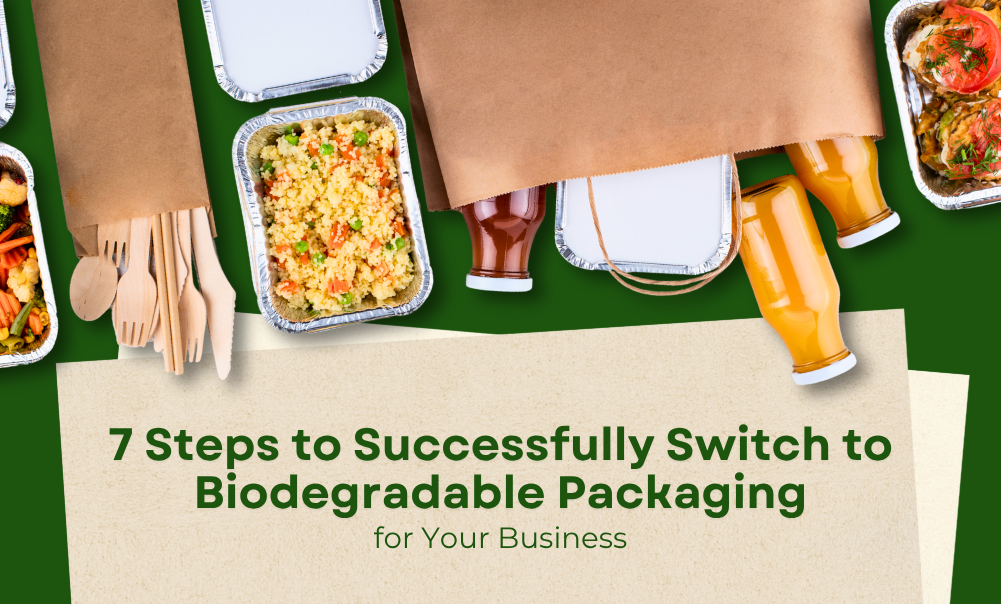
Eco-friendly alternatives are rapidly replacing traditional packaging. Consumers are now driven by strong environmental values, which spurred businesses to adopt greener solutions such as biodegradable packaging to meet their demands. Going green presents numerous business benefits, such as waste reduction, cost-efficient packaging, and an improved brand image. Adopting a strategic process to gradually integrate eco-friendly packaging in your business is quintessential to maintaining long-term sustainability.
In a period of technological advancements, diverse natural alternatives to plastic products have been developed to serve the needs of manufacturers and vendors in various sectors. Explore the types of biodegradable packaging solutions and viable approaches to make the green switch.
What is biodegradable packaging?
It uses natural sources, such as paper, wood, seaweed, hemp, cotton, and leaves, which break down easily without introducing pollutants or harmful chemicals to the environment. Although its decomposition rates vary, it only takes months or years, naturally incorporating itself back into the environment. This makes it an efficient, eco-friendly alternative to plastic, which decomposes slower and can take centuries to completely disappear.
7 Steps for Incorporating Biodegradable Packaging for a Greener Business
1. Audit existing packaging materials
Perform an assessment of your current packaging process and materials to identify which areas can integrate biodegradable packaging solutions. Include a waste assessment to set a benchmark for measuring progress. Use this state to define feasible objectives for the project, such as packaging waste production or complying with sustainability standards.
2. Research biodegradable materials
Get to know your packaging alternatives. Explore the most suitable materials for your products based on cost, sturdiness, and longevity. For example, plant-based alternatives like bagasse, bamboo, or cornstarch may go well with food products, while laminated cardboard or PLA can hold dairy products well.
Look for certifications and compliance with industry standards, such as the EN 13432 (European Standard for compostable packaging) and ASTM D6400 (US Standard for compostable plastics). This guarantees that your packaging solutions are authentically green.
3. Collaborate with an innovative packaging supplier
Reach out to eco-friendly packaging suppliers who can provide the right materials for your brand. Leverage their expertise to obtain cutting-edge biodegradable packaging solutions, which should help you achieve greener business goals. Discuss terms for bulk purchases and conduct pilot testing to measure product functionality.
4. Optimize your packaging design
If your goal is to reduce packaging waste, it is crucial to trim down the size of your eco-friendly packaging to your product’s dimensions. Use this opportunity to explore custom solutions, such as water-based ink for printing product codes and labels, or switching to energy-efficient industrial printers like drop-on-demand and continuous inkjet printers.
5. Communicate with your customers
Inform your customers of your switch to biodegradable packaging. Use your packaging as a channel to educate your customers about the best disposal and recycling practices. Add informative text such as Made with 100% Recycled Materials or Thank you for choosing a product that cares for the planet. Placing clear, easy-to-understand labels like this promotes your alignment with sustainability standards, at the same time encouraging consumers to adopt a similar concern for the environment through proper disposal of biodegradable materials.
6. Gradually introduce new packaging
Roll out your new packaging in phases. This strategy is essential for identifying errors, risks, and implementing changes or tweaks to product packaging early on. It also allows you to update internal operational processes related to procurement, handling, and storage of eco-friendly packaging.
7. Scale your green initiatives within the industry
It is vital to scale your use of biodegradable packaging in the Philippines over time. Businesses can integrate environmentally-friendly practices into its core business operations by developing strategic sustainability plans. One way to begin this is by forming partnerships with relevant nonprofit organizations specializing in sustainability within sectors such as manufacturing or F&B. These organizations offer expert consultation for the conceptualization, implementation, and refinement of biodegradable initiatives to ensure long-term benefits.
Applications of Biodegradable Packaging in the Philippines
Paper Packaging
Paper packaging is perhaps the most popular form of biodegradable packaging in the Philippines, used in a variety of applications from storage and shipment. Materials like carton and corrugated cardboard, paper, kraft paper, and their recycled counterparts are widely available and come in different types for customized use. Extra measures, such as lamination are applied to enhance its sturdiness.
Examples: Clamshell paper containers, shipping boxes, paper bags, molded egg cartons and trays, tissue paper
Bioplastics
Biodegradable packaging utilizes plant-based materials like corn, hemp, cellulose, wood, seaweed, and other biomass to develop eco-friendly alternatives to traditional plastics. There are many types of bioplastics, including cellulose-based, starch-based, protein-based, bio-derived polyethylene (fermented corn and sugarcane), and aliphatic polyesters (PLA, PHB, PGA).
Examples: Compostable tableware, packing peanuts, cellulose films, seaweed films
Mushroom Packaging
Mushroom packaging is derived from mycelium, or the root-like system of fungi, combined with agricultural waste like wood chips and corn stalks. It uses heat treatment to become solid and sturdy, and is used as biodegradable packaging solutions to replace styrofoam.
Examples: Cushioning inserts, cooler boxes, corner cushioning
Natural Fiber
Natural-based fiber is extracted from animals and plants, including materials like bamboo, cotton, flax, hemp, paper, wool, wood pulp, and agricultural waste like leaves to produce durable food containers, tools, and textiles products.
Examples: Bowls, food containers, textiles, trays, ropes, plates, utensils
What are the business benefits of biodegradable packaging?
- Supports a circular economy – When processed correctly, it allows materials to safely decompose and reintegrate nutrients to the environment, which promotes a circular economy.
- Optimizes the production process – Lightweight packaging takes up less space for inventory, storage, and shipment.
- Cost-efficient packaging – Because eco-friendly packaging is highly customizable, and low-waste, it can significantly minimize costs associated with packaging by trimming down the material used for void fill, excess wrapping, and oversized containers.
- Reduces waste – Biodegradable packaging can reduce a business’ overall waste by diverting it from landfills, and minimizing contribution to pollution.
- Improved brand image – Sustainability has become an important criteria for consumers today. This kind of packaging can elevate a company’s appeal to eco-conscious customers and business partners.
Biodegradable solutions are not just adopted to meet customer demand, but also promote responsible care for the environment. Through the use of diverse natural resources, businesses can make the wise decision to swap traditional packaging for eco-friendly alternatives and take the first step to more sustainable operations.
ALSO READ: 6 Eco-Friendly Food Packaging Solutions You Need in Your Facility
Elixir Industrial Equipment Inc., can help you bring sustainability into your production process. Our broad range of primary, secondary, and tertiary packaging solutions are designed to reduce manufacturing waste, giving you total value for money. We also offer high-precision printing solutions for your packaging, which lets you produce clear, vibrant, and accurate codes on a wide variety of substrates. Need a quote ASAP? Let’s chat today.