
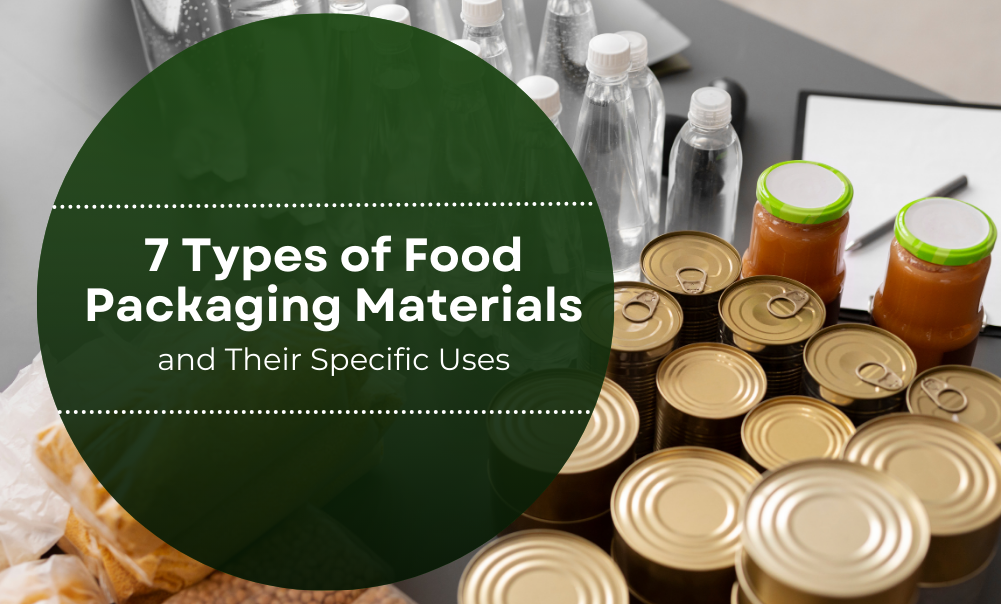
Using the right types of food packaging will propel your business to success. The appropriate packaging is essential for food preservation and protection. The primary function of food packaging materials is to prevent contamination and extend its shelf life. Additionally, it helps you comply with food safety regulations and provide the necessary information your customers need to know.
Well-made food containers are designed to safeguard specific kinds of products, and many suppliers offer flexible solutions. Discover which food packaging is best suited for your goods and their ergonomic designs.
7 Kinds of Food Packaging Materials and What They’re Designed For
1. Plastics
Plastics are one of the most common food packaging materials. You can spot various items packaged in plastic jars, bags, and bottles almost everywhere. Packaging manufacturers have developed diverse types of food-safe plastics over the years. Here are some examples.
- PET (Polyethylene Terephthalate)
PET plastic is a popular and versatile choice for protecting soft drinks, fruit juices, condiments, cream, and more. It is known for its lightweight but durable material. It has great chemical resistance, clarity, and is moldable to different forms.
- HDPE (High-Density Polyethylene)
Its rigid, translucent, and colorable material offers great protection for dairy, liquids, food buckets, and condiments. HDPE suits products at low to moderate temperatures (between -40°C and 90°C); however, it has limited protection for food exposed to high temperatures.
- LDPE (Low-Density Polyethylene)
Compared to HDPE, LDPE is more flexible and translucent. Due to lower heat resistance, it can easily be formed and sealed. Common applications include plastic bags for produce and baked goods, film layers for meat and frozen goods, as well as squeezable tubes.
- PVC (Polyvinyl Chloride)
Cling wraps, blister packs, and rigid tray covers are made of PVC, a budget-friendly, versatile, gas and moisture-resistant food packaging material. Although it is a durable plastic, it releases harmful substances when exposed to heat for a long period.
- PP (Polypropylene)
PP plastic is among the safest types of food packaging. It is BPA-free and has a high heat tolerance. Microwaveable food, dairy, and packed meals should be packaged in this kind of plastic.
- PS (Polystyrene)
While food-grade PS plastic cannot be microwaved, it is designed to store food products in cold and room-temperature environments. Common examples include yogurt containers, styrofoam cups and trays, egg cartons, and disposable cutlery.
2. Glass bottles and jars
Glass food packaging is great for preserved food, jams, beverages, and condiments. It is non-porous, generally free of chemicals and other potentially harmful substances, which maintains food flavor and freshness, as well as prevents contamination. It is also 100% recyclable and eco-friendly. The only challenge to these types of food packaging is its weight and fragility.
3. Metal packaging
Various metal food packaging materials are used as a barrier against light, oxygen, gases, and moisture. Aluminum cans are lightweight, highly malleable, and protect acidic and carbonated goods. This is why it’s a common material for soft drinks, whipped cream (aerosol food packaging), and foil lining.
Tinplate (steel with tin-plated surface) is another component of food packaging. It resists corrosion and is highly flexible. Canned fruit, vegetables, meat, soups, biscuits and coffee cans are usually packaged in tin cans.
4. Paper and cardboard
Many eco-friendly food packaging supplies use paper or cardboard variants. Paper is widely used for its versatile, lightweight material. It can also be combined with plastic and wax to enhance protection against grease or moisture.
- Cardboard – A popular choice for rigid containers, secondary, or tertiary packaging, protecting several units of food products during transport.
- Paperboard containers – Collapsible containers like cereal boxes, pizza boxes, takeaway containers, and frozen food packaging use paperboard.
- Wrappers – Wax paper and baking parchment are common types of food packaging for takeaways, baked goods, and deli.
5. Plant-based packaging
Food manufacturers and retailers now opt for biodegradable food packaging supplies as an alternative to plastics. Plant-based materials are one of them. These types of food packaging are made of renewable materials like cornstarch, bagasse/sugarcane, and diverse plant fibers. It helps reduce your carbon footprint and waste. It is a sustainable solution that can also attract eco-conscious customers.
6. Flexible packaging
Non-rigid materials often use flexible food packaging supplies. These are made up of a combination of paper, plastic, foil, and stretch film, and can hold various dry food, snacks, and liquids. Some examples include:
- Pouches – Snacks, ketchup, mayonnaise, cream, powdered mixes
- Bags – Bread and pastries, chips, vegetables, fruits, and other produce
- Flexible film – Stretch wraps and cling wraps for frozen goods, food packs, lids
- Sachets – Small, single-use units of sauces, beverage mixes, and ready-to-eat food
7. Composite packaging
Many food products require a combination of two or more types of food packaging materials to further extend its shelf life and protection. This is called composite packaging. It merges the properties to create more durable packaging.
One good example is aseptic packaging, which is used for juice and dairy milk cartons. It combines paper, aluminum, and PE to form a highly protective barrier against light and other contaminants, keeping your product sterile on the shelf.
Other kinds of composite food packaging supplies include:
- Plastic-aluminum
- Plastic-paper-aluminum
- Paper-aluminum
- Cardboard-Polyethylene (PE)
- Paper-Polyethylene (PE)
Selecting the best packaging option is essential to preserving the quality, flavor, and overall safety of your food products. Choose suppliers that can provide customizable and diverse types of food packaging materials to optimize your product protection.
ALSO READ: 5 Essential Considerations for Yogurt and Milk Packaging
Get comprehensive food packaging solutions at Elixir Industrial Equipment Inc., the leading industrial machinery supplier in the Philippines. We provide sophisticated systems to enhance your primary, secondary, and tertiary packaging needs. No matter what industry you belong to, we can tailor the right solutions and services for you. Get a quote when you message us today!