

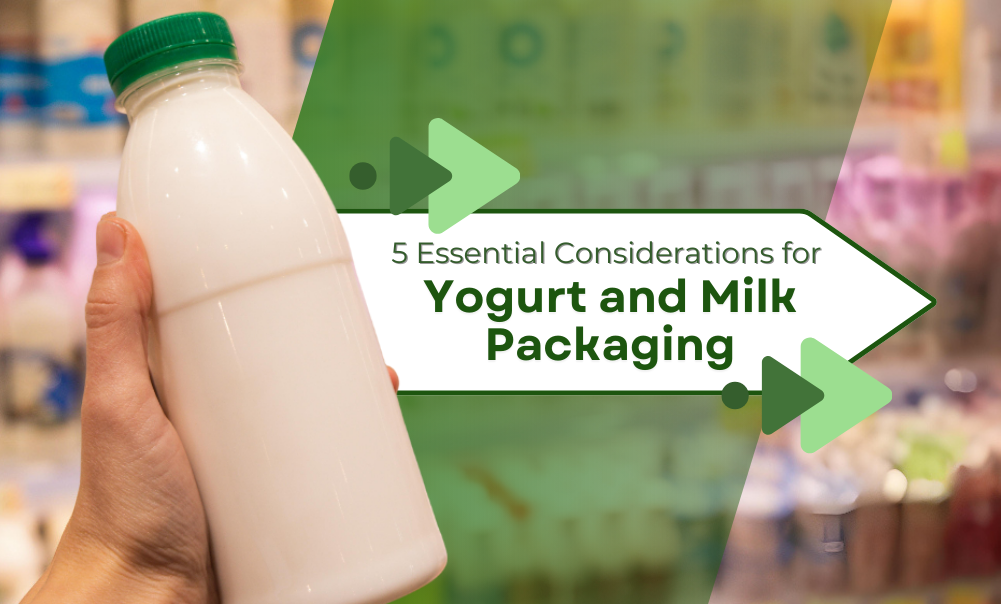
Milk and yogurt are two commonly used products in every household, but they also spoil quickly. Because of this characteristic, dairy product packaging can be tricky. Fortunately, modern solutions have been developed by industry experts to preserve the quality of dairy. Smart solutions for milk packaging combine advanced preservation techniques with design innovations, effectively promoting sustainability among manufacturers.
Dairy products require special considerations due to various factors concerning the nature of the goods. These are the aspects of milk packaging that every business owner must take into account.
5 Factors to Consider When Developing Milk Packaging
1. Quality Preservation and Longevity
Dairy packaging must effectively protect the product from external elements, such as direct light, low temperatures, moisture, bacteria, and oxygen. Exposure to these can cause fast spoilage of dairy products. It is also essential to store products at low temperatures (ideally 2-4 degrees Celsius) and in a clean environment away from strong odors. You can also prevent spoilage during transport by using refrigerated vehicles and facilities.
2. Materials and Components
Choosing the right materials for your milk packaging is crucial to protecting your products against toxic chemicals and the elements. Many food-safe solutions have been developed to avoid chemical interaction with products. To combat deteriorating quality, optimize your packaging materials based on each product type.
Liquid milk
- Low-density polyethylene (LDPE) – Low-cost, highly resistant to moisture and gas, heat-sealable.
- High-density polyethylene (HDPE) – Recyclable, durable, and prevents breakage, non-toxic, food-grade barrier against oxygen and light.
- Polyethylene terephthalate (PET) – Good for high-temperature processing, protects dairy products against oxygen and moisture.
- Aseptic packaging – Combines PE with paperboard, aluminum foil, and metallocene polyethylene (mPE) to create a 6-layer barrier against moisture, oxygen, and light.
- Glass – Ideal barrier against gas, moisture, and harmful chemicals, recyclable.
Powdered milk
- Metal cans – Made of food-safe stainless steel coated with tin, resistant to corrosion, highly durable, reusable.
- Flexible pouches – Combines plastic, paper, and aluminum to create portable, customizable packaging. Adaptable to various weights of powdered milk.
Yogurt
- High Impact Polystyrene (HIPS) Cups – Ideal for forming cups and tubs for yogurt packaging, cold-storage friendly, customizable, and remarkable insulation
- Aluminum foil laminate – Used for sealing yogurt packaging, laminated to improve barrier against oxygen, light, and moisture.
3. Consumer Convenience
Emerging trends in the packaging industry focus on the consumer’s ease of use. Dairy product consumers with fast-paced lifestyles will appreciate convenient milk packaging styles that manufacturers use.
- Portioned packaging – sachet, sticks, single-use packaging
- Portable packaging – preformed pouches, ready-to-eat milk cartons
- Resealable lids – clamshell containers, zip-lock pouches, screw-top caps
- Easy-open lids – peel-back, metal pull tabs
4. Business Branding
Milk carton packaging design is always the first impression of a consumer, which means it is a powerful marketing device. Distinctive colors and graphics can create visual appeal, increase sales, promote customer loyalty, and communicate necessary information about your dairy products. Keep in mind the following aspects of an impressive product branding.
- Brand Name or Trademark – Indicate the correct registered brand name or trademark alongside the product name to distinguish your item
- Product Name and Name of the Food – Provide clear, readable text that identifies what specific dairy product is contained in the packaging (e.g. UHT Milk, Skimmed Milk, Fresh Milk)
- Graphics – Bold, vibrant graphics that are printed on your packaging should relate to the product being sold. It must also strongly reflect the brand identity.
To prevent milk carton packaging designs from fading, invest in high-quality coding and marking devices like the Linx Continuous Inkjet Printer, Laser Coders, or Thermal Transfer Overprinter. Each type of coding machine uses specialized inks suitable for different substrates and can withstand extreme processing or storage temperatures.
5. Regulatory Compliance
Milk packaging and labels should always comply with the rules and regulations set by the Food and Drug Administration. In the Philippines, the following details must be present and readable on all dairy product packaging.
- Expiration date / Best By date –
- Complete Ingredients – Must list all ingredients in descending order according to portion, including natural or artificial flavoring, coloring substances, and food additives
- Net Contents and Drained Weight – List liquid weight by volume, solid weight by grams or count. Multi-unit packages should list the net weight of each unit, as well as the total package weight (ex. “20 x 10 g sachets (net wt. 200g)”)
- Name and Address of Manufacturers, Repacker, Packer, Importer, Trader, and Distributor – Crucial for product traceability and brand recognition
- Lot Identification – Promotes efficient product traceability and quality control, facilitates improved batch coding
- Storage Conditions – Communicates special storage conditions to prevent deterioration of product quality
- Food Allergen Information – Discloses allergens contained in dairy products to guide consumers with food allergies
- Directions for Use – Ensures proper handling and utilization of the milk or yogurt product
- Nutrition Facts – Tabulated information detailing recommended energy intake (RENI), protein, carbohydrates, fat (saturated, trans, cholesterol), sodium, calories, sugar, dietary fibers, vitamins, and minerals
The above information is indispensable to any dairy product packaging, as it conveys the fundamental information needed by every consumer, distributor, and brand partner.
It is paramount that yogurt and milk packaging adapt to evolving consumer demands and product innovations. Optimizing dairy packaging is not just important for maintaining high product quality, but also to drive persistent growth in the industry.
ALSO READ: All the Facts You Need to Know About Primary, Secondary, and Tertiary Packaging
Purchase world-class industrial machinery for your dairy business. Elixir Industrial Equipment, Inc. is the leading distributor of renowned brands such as Linx, Markcom, Evolabel, and Trident. We offer complete solutions for labeling, packing, and palletizing dairy products in the Philippines. Send us a message to get a quote today.